

What Fabrics Can You Not Use DTF On? Material Limits Explained
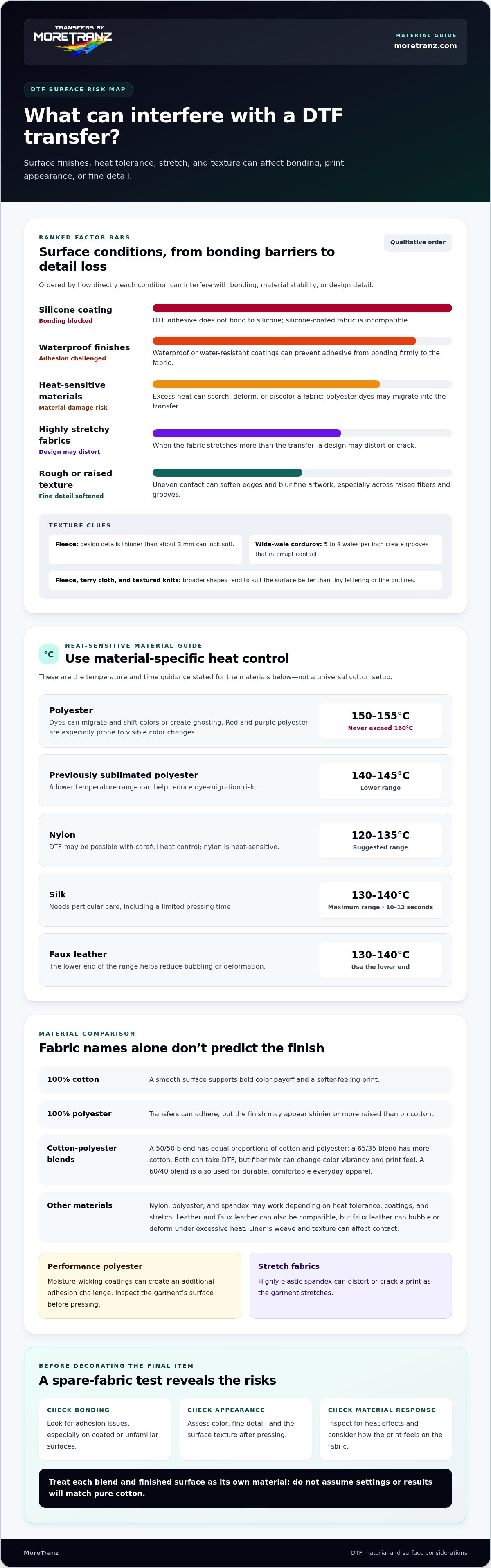
DTF isn't a universal match for every surface. Knowing what fabrics you can't use DTF on starts with spotting the main troublemakers: silicone-coated or waterproof materials, very stretchy fabrics, heat-sensitive textiles, and rough or heavily textured surfaces. They can resist adhesion, distort a design, or soften fine details.
Polyester and dark blends can behave differently from cotton. That doesn’t automatically make them unsuitable, but heat sensitivity, dye migration, coatings, and texture can affect a print’s appearance and durability. The right material matters as much as the design.
This guide covers fabrics and surfaces that can cause problems, why dark, blended, and synthetic fabrics need extra attention, and what to consider with materials such as nylon, silk, fleece, and leather. A test on spare fabric can help reveal adhesion or appearance issues before they affect a finished item.
Key Takeaways
- Silicone-coated and waterproof finishes can block adhesive bonding, making the surface itself a key factor in print performance.
- Polyester and cotton blends can take DTF transfers, but heat, dye migration, and fiber mix can affect color and finish.
- Stretchy materials may distort or crack a design when the fabric moves more than the transfer.
- Rough, uneven surfaces can soften fine details because the transfer may not make consistent contact.
- Test unfamiliar materials on a spare piece first, especially when the fabric has a coating or is sensitive to heat.
Is polyester bad for DTF printing?
No. DTF transfers can adhere to polyester, including 100% polyester apparel, but the finish may differ from cotton. Polyester prints may have a shinier finish and feel more noticeable than cotton prints. Cotton usually gives a softer feel and vivid, accurate colors. Polyester is a viable option, not an automatic match for every design or garment.
Heat control matters because polyester dyes can migrate into the transfer, shifting colors or creating ghosting. Red and purple polyester are especially prone to visible color changes. For polyester, use a press temperature of 150 to 155°C, and never exceed 160°C. Previously sublimated polyester needs extra caution: a lower range of 140 to 145°C can help reduce dye-migration risk. Test an inconspicuous area or spare garment before printing the final piece.
Cotton-polyester blends combine fibers that respond differently to heat and adhesive. A 50/50 blend contains equal proportions of cotton and polyester, while a 65/35 blend contains more cotton. Both can take DTF transfers, but the blend ratio can change color vibrancy and print feel. A 60/40 blend is also used for durable, comfortable everyday apparel. Treat each blend as its own fabric, rather than assuming settings or results will match pure cotton.
- 100% cotton: A smooth surface supports bold color payoff and a softer-feeling print.
- 100% polyester: Transfers can adhere, but the finish may appear shinier or more raised.
- Cotton-polyester: Color and hand feel vary with the proportion of each fiber.
That comparison helps answer what fabrics you can’t use DTF on: polyester isn’t automatically excluded, but heat-sensitive finishes and dye migration can complicate results. Cotton and synthetic fabrics also differ in how a transfer feels. A cotton shirt may feel softer, while a transfer can feel more noticeable on synthetic apparel. Moisture-wicking coatings on performance polyester can create an additional adhesion challenge, so inspect the garment’s surface before pressing.
Material names alone don’t predict the outcome. Linen’s weave and surface texture can affect how evenly a transfer contacts the garment, so test the specific item before production. Leather and faux leather are also compatible with DTF transfers, but faux leather can bubble or deform under excessive heat. Use the material’s response to a controlled test as your guide. For a polyester run, start with one sample, assess adhesion and color after pressing, then proceed only when the result meets the design’s needs.
Why do DTF prints look dull on some fabrics?
DTF prints can lose visual impact when texture interrupts contact, a coating blocks adhesive, or heat alters the material. Both the surface and its heat tolerance affect the result.
Uneven and Textured Material Limitations
Uneven materials keep the transfer from contacting every part of the surface evenly. Fleece, terry cloth, and textured knits can soften edges or blur fine artwork because raised fibers press differently from recessed areas. On fleece, design details thinner than about 3 mm can look soft. Wide-wale corduroy, with 5 to 8 wales per inch, has grooves that interrupt contact.
DTF transfers can still be applied to fleece or terry, but their surface texture affects detail and finish. A bold design with broader shapes suits these materials better than tiny lettering or fine outlines. For nylon, polyester, or spandex, DTF is possible, but the result depends on heat tolerance, coatings, and stretch. Highly elastic spandex can distort or crack a print as the garment stretches.
Heat-Sensitive and Waterproof Material Challenges
Heat-sensitive fabrics can scorch, deform, or discolor if the press temperature exceeds their tolerance. Waterproof and water-resistant coatings create a different obstacle: they can prevent the adhesive from bonding firmly to the fabric. Consistent pressure and contact across the transfer are essential for adhesion.
Nylon can take DTF with careful heat control; a suggested range is 120 to 135°C. Silk needs particular care, with a maximum press temperature of 130 to 140°C and pressing limited to 10 to 12 seconds. For faux leather, the lower end of 130 to 140°C helps reduce bubbling or deformation. These materials need settings suited to their fibers, not a default cotton setup.
Which fabrics are incompatible with DTF? Silicone-coated fabric is incompatible because the adhesive cannot bond to its surface. Waterproof-coated items also resist adhesion, while rough or heat-sensitive materials can produce weak or damaged prints. For nylon or heat-sensitive garments, embroidery or a sewn-on patch avoids heat-activated adhesive; coated surfaces need a decoration method designed for that finish.
Waterproof, water-resistant, and coated fabrics are difficult because their finishes can block adhesive contact. DTF can work on nylon, polyester, and spandex, but each has different risks: nylon is heat-sensitive, polyester can discolor under heat, and stretch fabrics can crack or distort. Heat can damage or discolor polyester and other synthetics when the press exceeds the fabric’s tolerance.
For a small production test, compare adhesion, color, and fine detail on a spare piece before decorating the final item. The DTF sample pack can help you evaluate a transfer on a test garment before committing a full run.
Silicone-coated fabrics and why DTF adhesive will not bond
Test an unfamiliar fabric on a spare piece before decorating the finished item. Use the correct settings for the transfer, then inspect adhesion, color, and feel after pressing. Silicone-coated fabric is unsuitable because DTF adhesive does not bond to silicone.
DTF transfers use powdered adhesive that melts under heat and pressure to attach a design to fabric. Silicone coating creates a barrier between the adhesive and the textile underneath. The transfer may appear to sit on the surface, but the adhesive cannot form the intended bond with the coating. More pressure or different artwork won’t make silicone compatible.
That distinction affects durability, not just first impressions. Cotton and coated synthetic fabrics provide different bonding surfaces, and polyester can make a print look shinier and more noticeable than it does on cotton. A coating can interfere with adhesion whether the underlying fabric is cotton or synthetic. If the edges lift during a sample test, the design isn’t securely attached.
Fabric also changes how designs look and feel. A smooth cotton shirt can show crisp detail and vibrant colors, while a transfer may feel more prominent on polyester. Rough or heavily textured surfaces can interrupt contact and soften small details. Coated fabric creates a separate problem: its finish can prevent adhesive contact even if the textile looks smooth.
- Surface: Silicone-coated fabric blocks the adhesive bond.
- Texture: Fleece or raised knit can obscure fine detail.
- Fiber: Cotton and polyester can differ in print feel and appearance.
For a practical suitability test, use a scrap of the exact garment or fabric, not a different material with a similar name. Press a small transfer, then examine its edges and surface for lifting, uneven contact, or visible changes. If the apparel stretches, gently flex the tested area and look for separation. This helps identify problems before a larger production run.
Keep the sample process consistent. Use the same transfer, press, and fabric finish planned for the final design, because each can affect the result. Testing plain nylon, for example, won’t show whether silicone-coated nylon will bond. Identify the coating, then assess adhesion and detail on the actual surface.
DTF use on canvas, denim, leather, and non-fabric surfaces
Canvas, denim, and leather aren’t automatically off-limits for DTF transfers. Their weave, texture, coatings, and heat tolerance shape the result. A flat cotton canvas panel behaves differently from a thick, textured tote, even when both are labeled canvas. Treat the actual item, not just its material name, as the deciding surface.
Canvas: Smooth, tightly woven canvas gives a transfer more even contact than a coarse or uneven weave. Raised fibers can soften small details or leave parts of the transfer with less contact. Check the print area for texture, seams, and coatings before pressing. Test a spare piece of the same canvas to assess adhesion and appearance.
Denim: DTF transfers can be applied to denim, but the fabric’s weight, seams, and surface texture matter. A flat section of a denim shirt or jacket offers a more even pressing area than a bulky seam or pocket edge. The suggested press range for denim is 330 to 345°F. Test the exact garment and inspect the design after pressing before using the same approach across production.
Leather and faux leather: Leather and faux leather are compatible with DTF transfers, but heat tolerance is a key limit. Some faux leather can bubble or deform during pressing. The suggested range for faux leather is 130 to 140°C, using the lower end to reduce that risk. Apply a sample to a hidden area first, then examine the surface for changes and the transfer for edge lifting.
A hard item may lack the fibers that fabric transfers are designed to bond with, while coatings or finishes can further interfere with adhesion. Don’t assume that a transfer suited to a cotton shirt will adhere to a coated panel, plastic, or another rigid item. Check whether the material tolerates heat and whether the adhesive can contact its surface.
- Inspect: Look for rough texture, coatings, seams, and uneven areas.
- Test: Use a spare piece of the same material and the intended press method.
- Assess: Check adhesion, color, detail, and any heat-related surface changes.
The difference between a successful fabric application and a failed surface test often comes down to contact. A raised canvas weave can interrupt detail; a denim seam can prevent even pressure; faux leather can deform under unsuitable heat. These materials call for different methods, not one default setting. Use a small test transfer on the actual surface before decorating a full item.
Why dark, blended, and synthetic fabrics can be difficult to print
Dark garments affect color visibility, while blends and synthetics introduce variables related to fiber and heat. DTF can work on confirmed materials such as polyester and blends, but fabric composition changes how colors appear, how a transfer feels, and how it holds up. A black cotton shirt, a red polyester jersey, and a tri-blend tee each need different considerations at the heat press.
On dark cotton, a white underbase helps the design show clearly. Without it, the garment color can mute the artwork, especially pale tones. Review the design against the shirt color before printing. Fine white lettering over black cotton needs a clear, solid base; transparent spaces in the artwork will still reveal the fabric underneath.
Synthetic fabrics need attention to both dye and heat. Polyester dye can migrate into a transfer during pressing, shifting colors or creating ghosting, particularly on red and purple garments. Polyester prints can also look shinier and sit more visibly on the surface than cotton prints. The fabric may be printable, but it can change the transfer’s appearance and feel.
Blends add another variable because different fibers respond differently during pressing. A tri-blend’s cotton, polyester, and rayon components can react unevenly to heat, so color and adhesive contact may vary across the garment. Wool-poly blends can also take transfers, though durability may be lower than on cotton. Judge the actual fabric rather than relying on a generic “blend” label.
- Dark cotton: A white underbase helps colors remain visible against black or navy fabric.
- Polyester: Dye migration can shift artwork colors, especially on red or purple garments.
- Tri-blends: Mixed fibers can produce less predictable color and bonding results.
Stretch adds mechanical stress after printing. On spandex or Lycra, the fabric may extend farther than the transfer, causing cracks or distortion in frequently stretched areas. A graphic across an activewear knee or shoulder faces more movement than one on a stable shirt panel. Place designs away from high-stretch zones when possible, and assess a test print while gently flexing the fabric.
Application quality also shapes performance through washing. Under-applied transfers on polyester may peel within 10-20 washes, while correctly applied DTF prints on polyester can survive 40-60 washes. Treat those outcomes as a reminder to match pressure and temperature to the garment, then inspect a test before production. Dark, blended, and synthetic fabrics aren’t one category with one setting; fiber mix, dye, stretch, and design placement all matter.
Transfers by MoreTranz: TrueColor® MAX DTF Transfers
MoreTranz offers TrueColor® MAX DTF Transfers for apparel decorators choosing transfers for a specific project. Check for silicone coatings, heat sensitivity, texture, and stretch before selecting a garment and planning production. A sample can show whether the fabric’s surface accepts the transfer and whether the finished design meets your needs.
MoreTranz also offers TrueColor® DTF Transfers, Spangle Transfers, and UV DTF Transfers. Match the option to your project, while keeping the material’s limits in view: a transfer can’t solve a surface that prevents adhesion or a fabric that can’t tolerate pressing.
Contact Transfers by MoreTranz to discuss your transfer project.
Turn material checks into a smarter production plan
Make the material decision before finalizing artwork or ordering blanks. Knowing what fabrics you cannot use DTF on helps you choose suitable garments early and avoid designing around a surface that resists adhesion. Keep a simple record of each fabric’s label, finish, color, and sample result. That gives your next production run a clear starting point.
Once a material performs as needed, match the transfer to the project’s visual direction. MoreTranz offers TrueColor® MAX DTF Transfers, TrueColor® DTF Transfers, and Spangle Transfers. Choose based on the design and garment, then use a sample to assess the combination before committing to a larger run.
Build confidence with a considered test. Choosing the material carefully gives your artwork a stronger path from screen to finished garment.
Frequently Asked Questions
Can DTF be used on any material?
No. DTF depends on a surface that accepts heat-activated adhesive and tolerates the press process. A cotton tee and a silicone-treated rain jacket can react very differently, even if both feel smooth. Check the material’s care label, finish, and construction before production. If the surface or finish is unfamiliar, test a small transfer on a spare piece first.
Can DTF Be Used on Any Fabric?
No, fabric type alone doesn’t determine suitability. Fiber content, texture, stretch, dye, and surface finishes all influence the result. Two shirts labeled polyester, for example, may differ if one has a water-repellent treatment. Read the garment label and inspect the print area, including seams and ribbed panels. A sample on the exact garment can reveal issues a generic fabric test misses.
Can DTF be used on any surface?
No. DTF transfers are primarily intended for fabric, and a non-fabric surface may not provide the bonding conditions they need. A rigid item may also fail to tolerate the application heat and pressure. Identify its base material and finish, then test a small area for adhesion and surface changes. A decoration method designed for that object may be more suitable.
Can You Put DTF on Spandex?
Yes, DTF can be applied to spandex, but stretch is the main concern. If the garment extends farther than the printed area can move, the design may crack or distort during wear. Consider a small graphic on a lower-stretch panel instead of a large print across a knee or elbow. Test the transfer, then gently stretch the sample to see how the design responds.
Can you put a DTF transfer on acrylic or plastic?
Don’t assume a fabric DTF transfer will work on acrylic or plastic. These rigid surfaces differ from woven textiles, and heat may change their shape or finish. Check the item’s heat tolerance before application and test an inconspicuous area with a small transfer. If the surface softens, warps, or fails to hold the design, stop and choose a decoration method intended for that material.
Can you use DTF on 100 percent polyester?
Yes, DTF transfers can be applied to 100% polyester. The garment’s dye and finish still matter: heat can cause dye migration, changing the artwork’s color. Previously sublimated polyester needs particular care because existing dye can shift into the transfer. Run a sample on the same garment color and construction, then inspect it for ghosting or color changes before printing a full batch.
Do different fabrics affect how long DTF prints last?
Yes. Fabric affects adhesion, stretch stress, and how evenly the transfer meets the surface, all of which influence wear. A print on a stable cotton panel faces different movement than one on elastic activewear. Washing and garment care also matter. Compare a test print after laundering it according to the garment’s care instructions, and inspect its edges and fine details before repeating the application on a larger run.
Can DTF adhere to fabrics with silicone, wax, or other specialty finishes?
Adhesion can be poor when silicone, wax, or another finish forms a barrier over the fibers. A coating may be transparent, so appearance alone won’t establish suitability. Check product labeling for water-repellent or stain-resistant treatments, then test the exact fabric rather than an untreated version. If the sample lifts at the edges or separates during gentle flexing, the finish is unsuitable for that transfer.